
Strengthening Community-Led Water Management Initiatives
Enhance the capabilities of communities to self-manage and self-govern piped water infrastructure by strengthening Village Water and Sanitation Committees (VWSC)
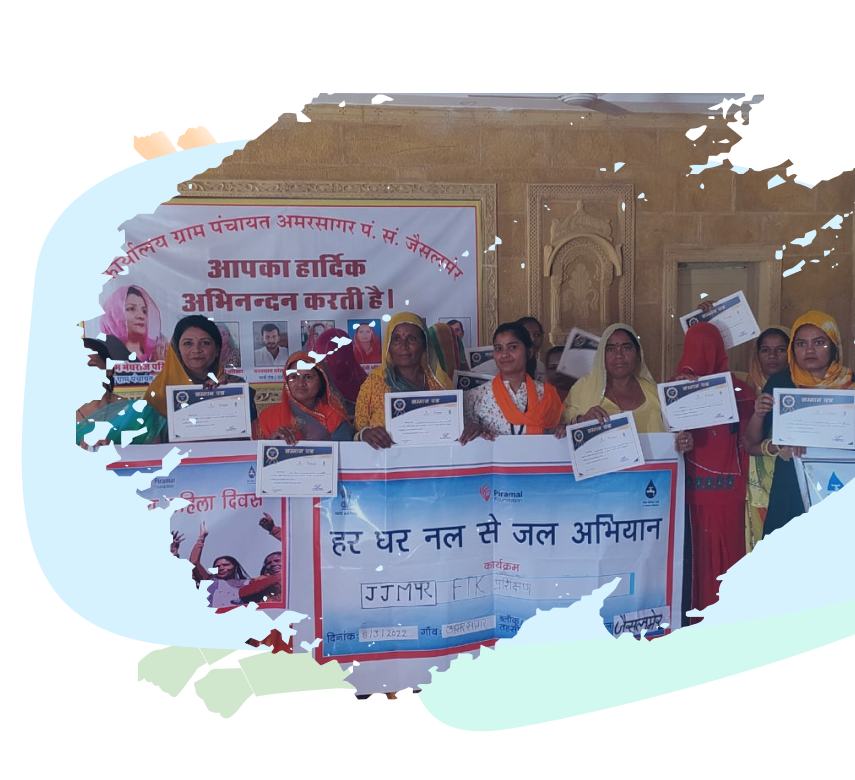
Table Of Contents
Overview
With launch of Jal Jeevan Mission, the piped water coverage in rural households of India increased from 17% in 2019 to 70% till date. The target for the scheme is to reach 100% by March 2024. In spite of the fast pace at which access to safe drinking is being provided to the rural population, the long-term sustainability of the infrastructure is at risk due to various factors like:
- Lack of community ownership: The responsibility of operating and maintaining the rural piped water infrastructure being created under Jal Jeevan Mission is given to the community and a sub-body under the gram panchayat known as the Village Water and Sanitation Committee. However, the VWSC continues to remain inactive in most of the villages. In places where the committee is active, it hasn’t received the required training to run the operations and maintenance of the piped water schemes.
- Unorganized operations and maintenance: Most locations do not have defined protocols for operations and maintenance. Hence major breakdowns are frequent resulting in hesitancy on the part of the community to pay water tariff in time which eventually disrupts operations of the piped water schemes.
- Water Quality and Quantity Issues: As water is going to be collected from a single source and distributed over a long period of time, source sustainability (water conservation) measures need to be incorporated to ensure long-term uninterrupted supply of water. Also, with changing seasons and changing depths of groundwater source, the quality of water changes from time to time. Hence there is a need to institutionalize water quality protocols. But these practices are not being carried out in most locations.
Need of the hour
To ensure long term sustainability of drinking water supply areas it is very essential to empower communities and village water collectives to become self-reliant, self-sufficient and self-governing in water management.
Interventions
CoE Sustainability with the aim of ensuring long-term access to safe drinking water
in rural areas, has carried out the following Campaigns:
in rural areas, has carried out the following Campaigns:
Jal Swavalamban
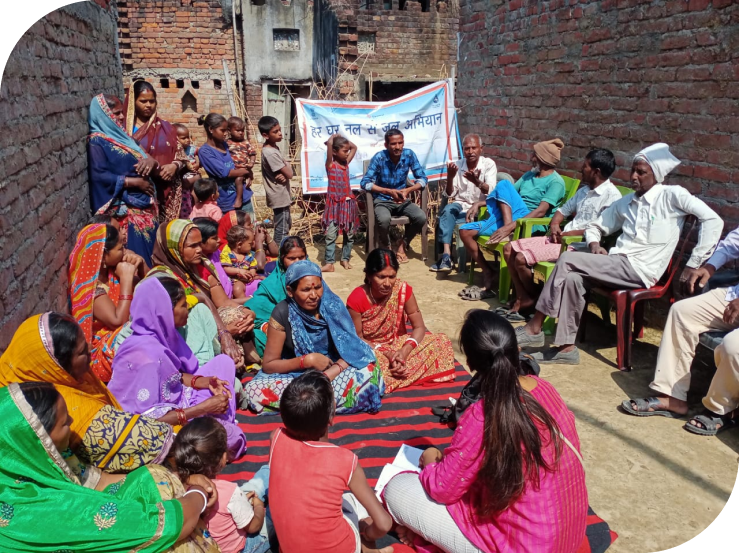
Activated/Reconstituted Village Water and Sanitation Committees in intervening villages and built their capacity in techno-financial management of schemes, promoted community ownership of schemes through behaviour change activities.
Jal Sewa
Institutionalise operations and maintenance protocols and train operators in management and minor repair work for schemes.
Jal Suraksha
Institutionalized water quality protocols and trained 5 women in each village to do regular water quality testing of water being supplied.
Jal Sanchayan
Promoted water conservation and wastewater management initiatives through convergence between schemes of different government departments.
Scale of Work
Districts
Gram Panchayats
Beneficiaries
Impact of the Program
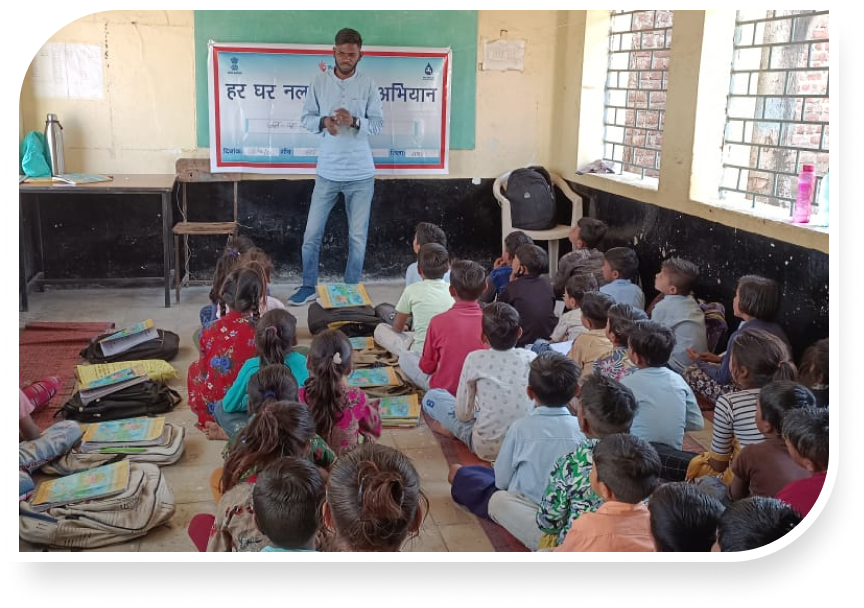

250 VWSC’s activated/Reconstituted
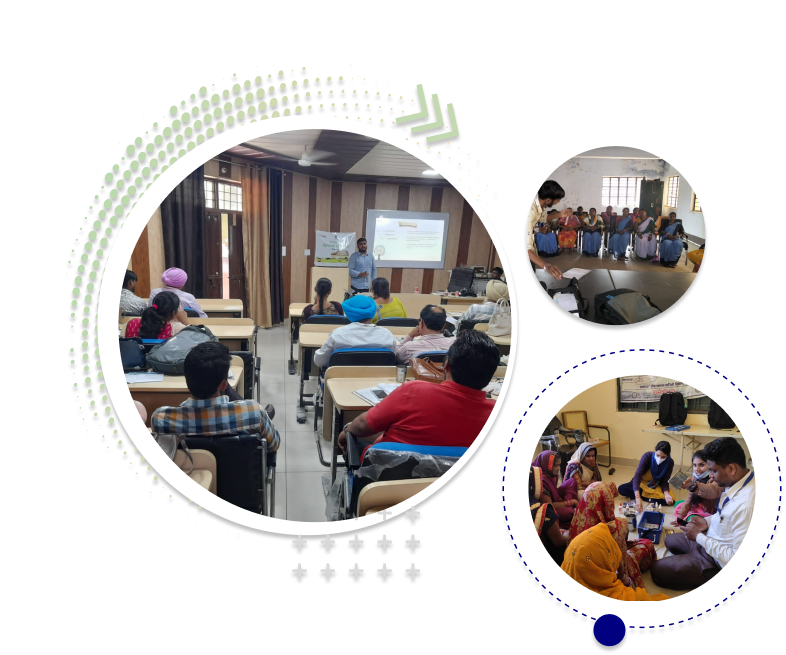
1980 VWSC members trained
250 Operators trained
600 Women trained on Water Quality Testing
Program Gallery
Get in Touch
If you have any questions or inquiries, do not hesitate to get in touch; we look forward to engaging with you.