
Does Learning Happen only in Classrooms?
When we think about schools, we still mostly equate them with classrooms. Our interventions in learning in schools often tend to get limited to attempts at improving pedagogic practices in the classroom and the curricular frameworks necessary for facilitating such work. What if we start thinking about the school as an institution beyond the classroom? If we do that, it may open up both new avenues of engagement with the school as an institution, and with students, teachers, and staff as stakeholders. It can also deepen our understanding of processes related to learning and has the potential to help us begin a journey of reengaging with classrooms with refreshed sensibilities.
There are many such spaces in schools, be they physical, social, or temporal. Some already exist as learning spaces, but their potential may not be fully utilized. Some others will need focused effort for them to start working for this purpose. A good example of the former are libraries. Although a large number of schools, especially in the government school system, function without libraries, many schools do have a library. However, even schools with libraries are often happy with having a weekly library period and herding children into the space for some unsupervised break time. Libraries have the potential to radically transform children’s engagement with learning processes. The process of library work involving the curation of books, the development of a collection, and engaging with children with read-alouds, etc., can also help teachers and library staff hone their skills and build capacities.
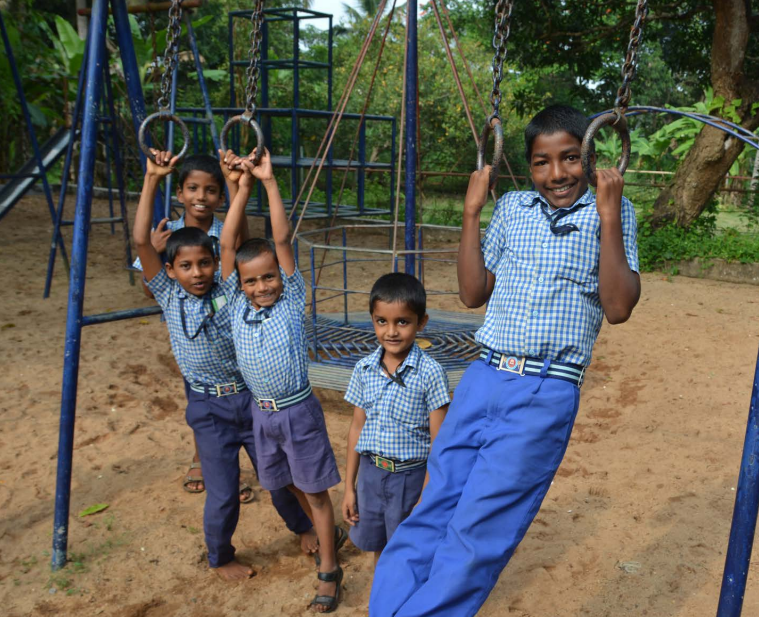
Similarly, the way we relate to our bodies and nourish them constitute an important aspect of education. It is high time the training of the body is seen as being as important as training the mind. The playground, sports, and physical culture in general, are much-neglected areas of learning. These have been marginalized because of our disproportionate focus on the classroom. The playground is also a site for children’s socialization. Thus, it can become an important space for social and emotional learning as well. However, it needs to be thoughtfully utilized for this purpose. Reorienting our interventions in schools in a way that sees the playground as a vital site of learning will be an important step in this direction.
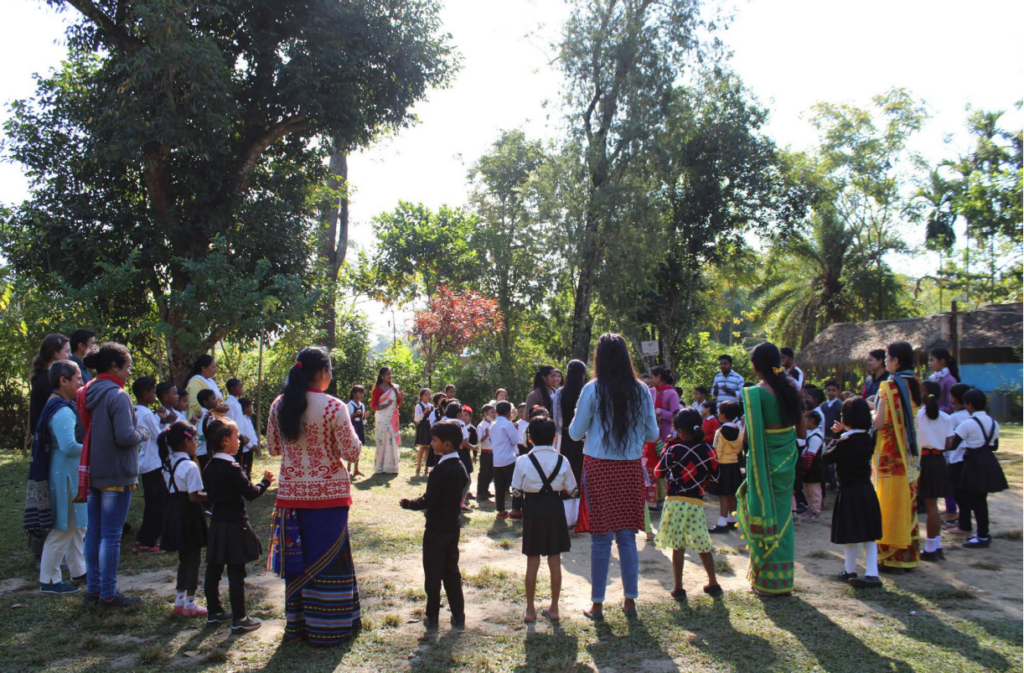
The school assembly is similarly utilized in a suboptimal fashion as a tool for passing on messages and notices. As a space, it can be used to develop a culture of learning and inclusion by encouraging students to speak and participate, especially those that come from marginalized communities. Tools such as circle time can be introduced to revitalize the school assembly as a space. However, circle time can be used in a much broader way to facilitate social-emotional learning and in developing an inclusive, learner-centered school culture as well.
Alternative schools across the country have demonstrated the importance of kitchens
and kitchen gardens as spaces where children can develop significant life skills, from cooking and teamwork to developing healthy relationships with nature and one’s own body. Learning how to grow and cook one’s own food can also have multiple other benefits, such as lower levels of stress, and a greater confidence in one’s abilities. Doing this in government schools, especially, might be a challenge that is worth exploring. Kitchen gardens are one way in which children in schools can develop a relationship with nature. The school garden similarly is a site for nature learning that is not often adequately explored.
Nature walks within and around schools, and closely observing how plants and trees in school gardens respond to seasonal change, recording these and learning from this process, is one set of methods that some schools and organizations are following to great effect. The work of ‘Nature Classrooms’ in this space has been exemplary.
Teachers’ commons rooms, PTMs, and other such spaces and meetings in schools, where adults gather for various processes can also be used for capacity building and developing democratic school cultures. It is also possible to use events that take place (or can potentially happen) in schools for learning-related interventions. These include annual literature festivals, annual functions, FLN melas, and science fairs, etc. These events can be used to help promote experimental science, develop children’s familiarity with theater practice, and help them joyfully pick up the skills of literacy and numeracy. While working in these spaces, it might be worthwhile to explore and try and restore a sense of joy and agency to both students and teachers.
Key Learning Spaces in Schools outside the Classroom Why We Must Work in Them and How
In the last three years, after the COVID-19 pandemic forced nationwide school shutdowns, students have faced extreme situations ranging from no classroom sitting experience to extreme focus on addressing the learning regression with classroom-concentrated efforts. During the pandemic, we were forced to explore every avenue of learning outside the school or the classroom, whether gardening, online dancing, children learning through radio and television – even in government schools.
After schools reopened, our goal has become ‘back to the classroom,’ where we want to recover from learning regression by concentrating our efforts towards classroom-based learning. With the advent of National Education Policy (NEP) 2020, and the launch of the Foundational Literacy and Numeracy Mission, most states are gearing up toward developing the state curriculum framework and modules for realizing the recommendations of NEP 2020.
It is the right time to ask the first question, that are we doing enough to provide students a comprehensive schooling experience or are we just aiming to enhance their classroom learning?
Students walking and exploring corridors without fear, students playing in a playground with or without supervision, are learning opportunities. Drawing freely to express themselves, picking up a book of their choice from the library, and reading it independently, are also learning opportunities.
From participating in the school assembly, to sharing their favourite story, to developing a project for an environment sustainability mela and presenting it in front of their schoolmates in the school assembly, are varied learning opportunities. From learning dance and expressing through Mandala art… The list can go on…
Clearly, we all have witnessed and experienced these learning opportunities outside the classroom. Often these are termed as co-curricular activities, extracurricular activities, or co-scholastic activities, etc.
National Education Policy 2020 emphasizes that the “aim of education will not only be cognitive development, but also building character and creating holistic and well-rounded individuals equipped with the key 21st-century skills”.
In section 4.6, NEP recommends that “experiential learning will be adopted, including hands-on learning, arts-integrated and sports-integrated education, storytelling-based pedagogy, among others to provide students different avenues to learn and build their capabilities beyond the regular classroom interaction”. Thus, policies advocate and promote a well-rounded, comprehensive schooling experience for each child.
It is evident, whether it is NEP’s recommendations, or parental expectations of children’s holistic development, our schools are struggling to achieve it. This does not mean that we should not value learning of subjects, and focus less on subject-based competencies. Rather, the attempt of schooling and education must be to provide diverse opportunities for children to learn and expand their skills and worldviews as imagined in 12 skill sets of 21st-century skills.
21st-century skills are broken into three categories:
- Learning skills: The four ‘C’s teach students about the mental processes required to adapt and improve upon a modern work environment. The 4 ‘C’s of 21st Century learning skills are:
- Critical thinking: Finding solutions to problems
- Creativity: Thinking outside the box
- Collaboration: Working with others
- Communication: Meaningfully talking to others
- Literacy skills (IMT): Focus on how students can discern facts, publishing outlets, and the technology behind them. There’s a strong focus on determining trustworthy sources and information to separate it from the misinformation that floods the internet. The three 21st Century literacy skills (IMT) are:
- Information literacy (I): Understanding facts, figures, statistics, and data
- Media literacy (M): Understanding the methods and outlets in which information is published
- Technology literacy (T): Understanding the machines that make the Information Age possible
- Life skills (FLIPS): Look at intangible elements of a student’s everyday life. These intangibles focus on both personal and professional qualities. The five 21st Century life skills (FLIPS) are:
- Flexibility (F): Deviating from plans as needed
- Leadership (L): Motivating a team to accomplish a goal
- Initiative (I): Starting projects, strategies, and plans on one’s own
- Productivity (P): Maintaining efficiency in an age of distractions
- Social skills (S): Meeting and networking with others for mutual benefit
The current curriculum and learning scenario majorly focus on classroom and textbook-centered learning, which is important but not enough to facilitate the above mentioned 21st-century skills. To build these, our children need a comprehensive schooling experience inside and outside the classroom and the school. Jobs in the future will be characterized by one’s ability to develop these skills that need to be nurtured from childhood.
If learners are self-aware, ask critical questions, have a solution-oriented mindset, articulate and express themselves confidently, and build supportive relationships, they can be potential drivers of change. And this kind of learning can’t be nurtured within the confinement of four walls and textbooks. Learning within and beyond the classroom will help us realize this vision.
For example, as the ‘Prime Minister’ in the student parliament or Bal Sansad in the school, a child is democratically elected. She identifies problems in her school and undertakes change initiatives to resolve them with the help of school administrators and community members. Thus, tasked with overseeing key functions and activities around the school, children
Will end up building initiative, flexibility, negotiation, and presentation skills, and leadership and problem-solving skills. These 21st-century skills are crucial for their future jobs, which regular classroom teaching might not be able to develop.
The second question is, what are the key school spaces outside the classroom and what are the key attributes of school processes related to these?
Library: A space which provides free access to students and teachers to read books of their interests and expand their knowledge and develop a broader worldview. Libraries have a collection of materials, books, or media that are accessible for use.
Assembly: A gathering where the whole school community gets together usually in a hall, a ground, or a large space, for the purpose of doing things together, communicating matters of significance and to create opportunities for enriching the students’ learning and development.
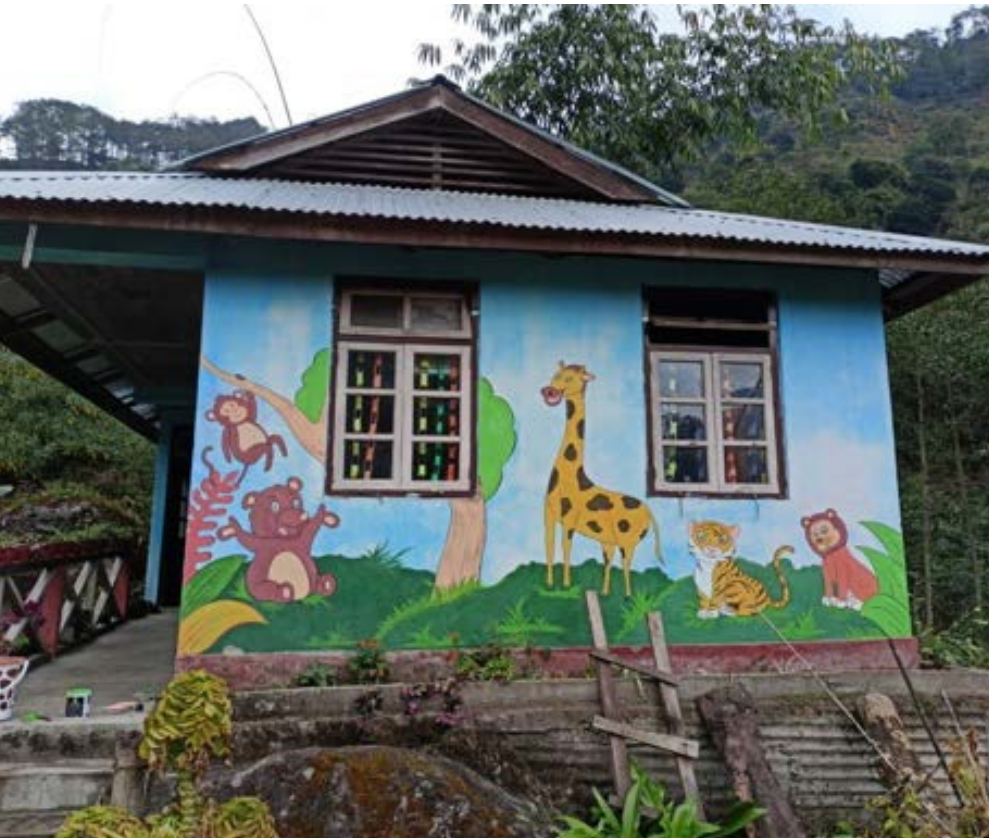
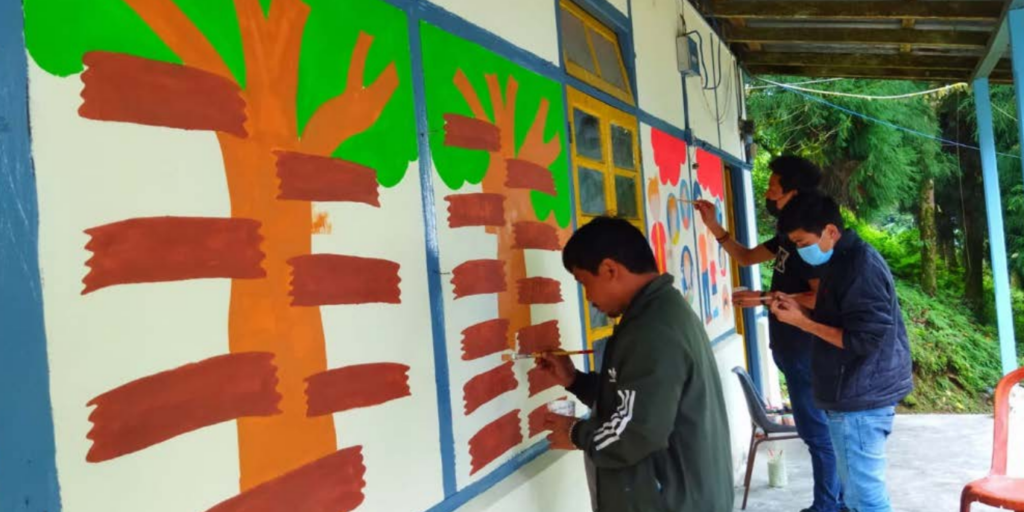
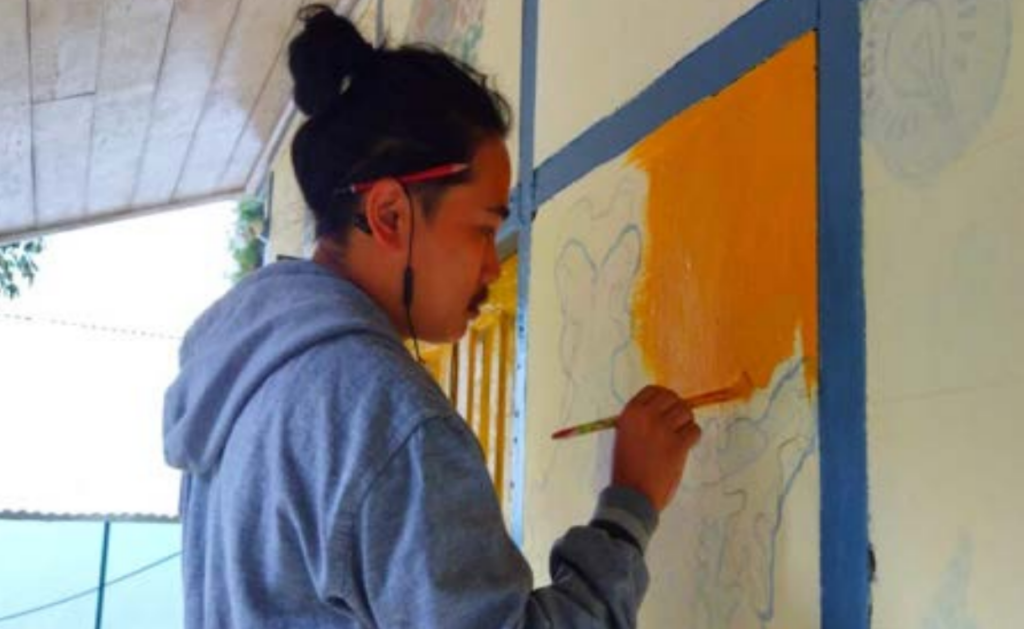
Building as Learning Aid (BaLA): An innovative concept towards qualitative improvement in education, through developing child-friendly, learning and fun-based physical environment in school infrastructure. It is a way to holistically plan and use the school infrastructure.
Bal Sansad: A platform of the students run by the students and for the students where they can have open discussions about their needs, rights, roles, and responsibilities in the context of schools and communities, and participate in a range of activities from theatrical performances, to displays of craft skills, physical abilities, academic skills, and knowledge.
Library: To create opportunities for children to become lifelong learners. Students access books independently and in adult supervision. Provide exposure of worldview beyond the textbook curriculum exchange. Different reading-related activities provide students chances to express themselves and understand others’ perspectives. Key 21st-century skills which can be enabled through the library: Judicious and effective use of information is an important skill students need to develop. Libraries are the right place where students can be trained in the effective utilization of information available from both print and digital resources. Libraries help to create an inquiry-based and research-based learning process which nurtures self-learning and encourages students to ask questions and seek help when needed. Libraries help develop skills like critical thinking, problem-solving, communication, and collaboration to help students construct knowledge. To narrow down the digital skills gap and inequalities worldwide, students need to be equipped with strong digital literacy skills. Libraries can give them training in skills like ethical use of online resources, evaluation and authentication of information, understanding of cybercrimes, and security tips, etc. Present status: Widely acceptable and recommended in school facilities across the states in India. Key gaps: All stakeholders understand its importance. However, many lack resources, and the required shift in mindsets, to effectively use libraries for learning.
Assembly:
- To develop a sense of community as well as the confidence to express and participate in large gatherings.
- Students come together to share space and participate in a large gathering.
- Provide opportunities to students to explore different activities to express themselves age appropriately.
- Provide opportunities for students to start their days with enjoyment, fun, and witnessing talent, achievement, and something new in schools.
Key 21st-century skills which can be enabled through the school assembly:
- Collaboration skills, as students and teachers together plan and execute purposeful activities for the entire school.
- Effective communication skills, as students are enabled to share their experiences, stories, and anecdotes with others and empowered for public speaking and taking up the stage.
- Creativity, as students showcase their talents in front of the entire school.
- Critical thinking, as students discuss the problems of the school and think through collective responsibility and solutions.
Present status:
- Considered as part of all school routine, at least for 30 minutes daily.
Key gaps:
- Present conduct is restricted to disciplining students, offering prayers and the sharing of school announcements.
- School stakeholders need capacity building to conduct this process for learning, and as a fun-filled, engaging process.
Building as Learning Aid (BaLA):
- To promote continuous self-learning and facilitated learning from school structures and environments.
- Teachers use their immediate school infrastructure and environment for experiential learning of students.
- Students develop capacities to self-learn from structure as well as from their environment.
Key 21st-century skills which can be enabled through BaLA:
- BaLA aims to make the students curious about their surroundings and to help them explore new ways of looking at things and learn from the process. This builds creativity and critical thinking.
- In a BaLA-based learning set-up, students apply their understanding of literacy, numeracy, force, acceleration, and circular motion to complete playful and practical activities.
- A BaLA-based classroom and school setting promotes team-based projects. Here groups draw on everyone’s strengths to solve problems. This exposes students to new ideas and opposing viewpoints, while demonstrating the power of the collective mind.
Present status:
- Multiple states are developing school infrastructure considering it as a learning opportunity.
Key gaps:
- Most states still do not acknowledge the school building as a critical component to facilitate learning.
- Designing school buildings and spaces reflecting BaLA is a resource as well as capacity development issue.
Bal Sansad:
- To develop interpersonal skills, leadership skills, and to experience active citizenship and the concept of democracy.
- One of the school processes that need the least amount of capital resources to support students in developing many of the 21st-century skills.
- Provide students an avenue to learn and participate in solving problems as well as to experience democracy.
Key 21st-century skills which can be enabled through Bal Sansad:
By taking up leadership roles in the Bal Sansad, or by being responsible members of the student body that holds the Bal Sansad accountable, students reflect on themselves and understand multiple dimensions of their personality. As student leaders, they are pushed to locate, analyze, and synthesize information, identify problems, make informed decisions, ask questions to challenge existing norms, and move toward finding solutions and bringing about change. Students collaborate, build enabling relationships, take responsibility for their actions, and become adaptable while driving change initiatives. The entire experience of running a democratic parliament nurtures an environment where students learn to articulate themselves clearly, comprehend others effectively, and respond with compassion and sensitivity.
Present status: Multiple states have recognized the Bal Sansad as one of the school activities.
Key gaps: There is a lack of know-how in facilitating the Bal Sansad and its potential role in developing leadership skills among students. Teachers and headmasters require capacity building to understand the Bal Sansad and its processes to achieve its full potential.
The third question is, do we value these opportunities enough to create systemic processes in the school so that these learning opportunities or spaces are not ‘sometime/occasional/event’ activities or phenomena?
It is a general practice that learning opportunities beyond the classroom are sparse and sporadic. They are hardly organized and valued even less. Children might be learning something or the other from spaces outside the classroom. However, they are generally unable to connect these learning experiences with classroom learning, nor are they encouraged to do the same. NEP 2020, and other policy documents, have some relevant recommendations on these, which we list on the next page. Despite all policies recommending holistic education and learning beyond the classroom, schools’ administrative stakeholders’ focus continues to remain on classroom learning.
There are two critical reasons for this gap. First, classroom learning is considered ‘fundamental,’ and outside learning experiences are still seen as ‘add-on activities.’ Second, budgetary allocations and teacher training focus on classroom learning. There is little focus on creating holistic learning experiences for students. Additionally, there is a lack of infrastructure and resources for facilitating learning outside the classroom. As a result, our last-mile delivery agents in the public education system, head teachers, and teachers, are either not equipped for facilitating learning outside the classroom, or they are not capacitated for creating and using learning spaces outside the classroom.
Policy Recommendations for School Processes
Library
- Committee on National Policy on Library and Information System 1986: “Libraries are central to education, and the only way that our education system can be freed from cramming is to build teaching around the library resources of the educational institutions. Children should be introduced to the pleasure of reading and importance of books at an early age.”
- “No school or college should be established without a library and a proper qualified librarian. Primary schools where such facilities cannot be provided should share the resources of the community library. In areas where community library does not exist, the primary school should serve as the base of the village library.”
- National Education Policy 2020 recommendations: In section 7.2, NEP recognized that “our school complex does not have facilities for music, sports, and library.” In the section on ‘Lifelong Education,’ the fifth recommendation states that “improving the availability and accessibility of books is essential to inculcating the habit of reading within our communities and educational institutions and promotes different forms of libraries within and outside schools.”
BaLA
- Right to Education Act, 2009: “Crucial parameters for school development through the infusion of new learning and ideas on design innovations, whole school planning and building schools that are child-friendly. The parameters include an all-weather building consisting of at least one classroom for every teacher and an office cum store, separate toilets for boys and girls, safe and adequate drinking water facilities for all children, barrier-free access, boundary or green fencing, kitchen for cooking the MidDay-Meal, a library, and a playground.”
- National Curriculum Framework 2005: “The teacher must teach concepts using the child’s environment. The environment is familiar and can be understood. Young children learn only in concrete ways, using their senses. Language can be taught using familiar poems, songs, games, and stories. Science can be taught using familiar plants, animals, and food. Math can be taught using leaves, stones, and seeds.”
Assembly
- National Curriculum Framework 2005: “Assembly time can be used for reading the headlines of the morning newspaper, performing some physical exercises, and singing the national anthem.”
- “Other activities could also be added, for example, singing together, or listening to a story, or inviting a person from the local community or an outside guest to speak to the children, or hold small events to mark some significant local or national happening.”
- “Classes that have undertaken some interesting projects could also use this time to share their work with the whole school. If not every day, such longer morning assemblies could be planned once or twice a week. In composite schools, depending on the theme, a junior school assembly and a senior school assembly could be held separately.”
The fourth question is, how do we develop systemic processes in schools, which organize these learning spaces outside the classroom to increase learning opportunities for every child in our public education system?
We illustrate one possible answer to this question by discussing Piramal Foundation’s work in this area. To address gaps in this intervention space, Piramal Foundation is committed to developing the capacity of the state and that of other stakeholders (such as teachers, headmasters, Cluster Resource Persons, and District Institutes of Education Training) to enhance students’ learning opportunities outside the classroom, by focusing on four school processes. These include those related to libraries, the school assembly, BaLA, and Bal Sansad.
Piramal Foundation’s Approach:
Continuous recommendations across different policies and Acts emphasize on the importance of these school processes. Yet, these are generally perceived to be ‘good to have’ rather than ‘must have’ school processes. Secondly, in different scenarios, the availability and deliberate activities conducted in these school processes vary depending on school resources, stakeholders’ knowledge, skills, belief, and mindsets.
To address this gap, Piramal Foundation has designed a ‘Capability Maturity Model’ (CMM) – given below – for these school processes so that any stakeholder, be it external organizations, school teachers, headmasters, state, and district education functionaries, can set up and execute these processes. This can address informal planning and implementation of school processes for learning outside the classroom.
CMM is a 5-stage maturity model. For any intervention to reach its maximum potential, there are 5 stages which should be achieved in order to mature and move to the next level of the intervention. The five stages define the journey from non-existent to a sustained phase, where students, staff, and community, all are participating and contributing members in the process.
The capability maturity model is designed considering three important aspects of Piramal Foundation’s approach:
- System driven: To create a system-driven model that provides different stakeholders with frameworks to plan and implement solutions. Thus, this capacity maturity model has systemic milestones to be achieved at every phase.
- Ensuring community partnership: School processes can’t be sustained to provide continuous opportunities for learning outside the classroom if they do not integrate community participation. Thus, we actively engage communities in our intervention to create awareness and ownership.
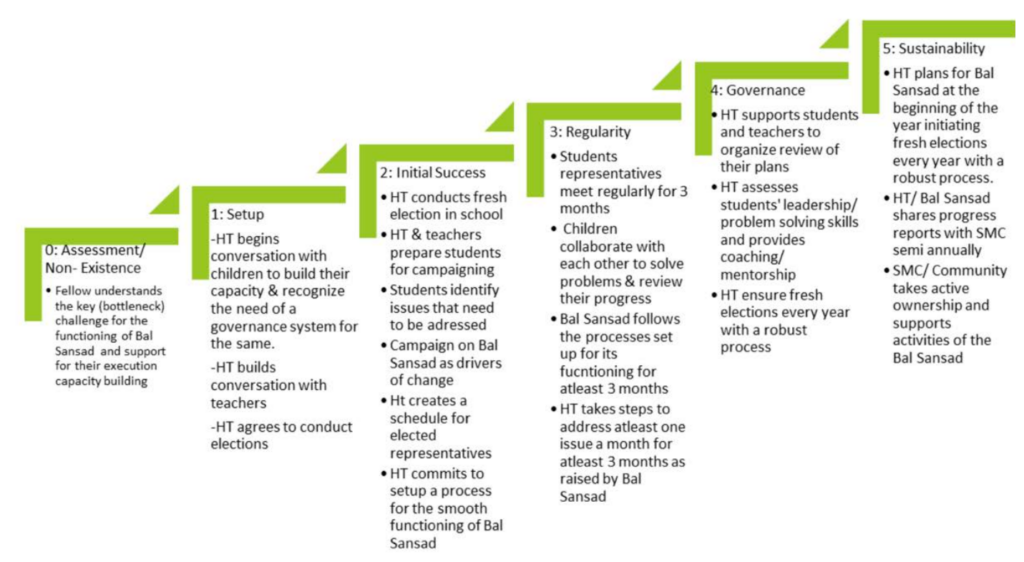
Towards these must-have school processes, and collaboratively plan interventions to increase participation from community members and to establish governance mechanisms to ensure the accountability of schools. The different categories of community stakeholders to be involved and leveraged for enabling school processes are youth, volunteers, Self-Help Groups, Panchayati Raj Institution members, faith leaders, local media, etc.
Ensuring Scalability: The capability maturity model is designed to increase the scalability of these processes. The school process implementation journey, from the non-existence level to the sustainability level, broken down into micro-milestones, supports stakeholders to take key action steps to achieve that stage. Scalable products are defined as those that can be operationalized, implemented, and internalized across cultural contexts by user communities.
Working in Schools outside the Classroom: Reports from the Field
- Kerala-Library: To promote literacy
rate in tribal districts - NITI Ayog appreciated-ShravastiBal Sansad
And organizations with minimal or no need for facilitation. Thus, with a step-by-step approach, these school processes lend for easy implementation, making them scalable.
It is important to reiterate that our students need all our combined efforts to support them in achieving the subject-based competencies. But as Dewey shares, “Society must have a type of education which gives individuals personal interest in social relationships and control and the habits of minds which secure social changes without introducing disorder.” Thus, we have to start looking outside the classroom, and encourage children to develop the habit of learning from their environment, peers, and social settings. This encouragement has to be facilitated with deliberate efforts. Thus, facilitating these four school processes can be a good starting point.
Nandita Raval is a co-founder at Kaivalya Education Foundation and a core team member at Piramal Foundation. In her journey of 33 years, she has worked in various roles as a teacher, teacher trainer, and principal to policy consultant.
Seema Sirohi is Senior Program Manager at Centre of Excellence for Foundation Literacy and Numeracy in Piramal Foundation. She has been working in the education sector for the last eight years, and she is an alumna of Azim Premji University.
Website: https://piramalfoundation.org/
Email Address: nandita.raval@gandhifellowship.org
Latika Vihar: More Like Real Life
To be yourself in a world that is constantly trying to make you something else is the greatest accomplishment. ~ Ralph Waldo Emerson
Play is essential for children’s development. Far from being a waste of time, or something children should only do after their homework is finished, play is actually how children learn. We scold them for ‘playing’ with their food or daydreaming when they should be studying, or splashing and wasting water when they should be taking a bath, but it is precisely at these times that children’s brains are making connections and making sense of experiences. Without play, children’s lives are diminished and their development is impaired. The joy we associate with childhood is seen most vividly in the way children play. Even in the most difficult circumstances – dire poverty, war, natural disasters – children find ways to play. In news reports of the recent earthquakes in Turkey and Syria, it was amazing to see footage of children playing amidst the wreckage. A puddle of water, a pile of broken bricks, a stub of chalk – all were transformed into toys by a child’s imagination and desire to have fun. While their parents understandably grieved for the loss of life and property, the children were already engaged in healing through the incredible power of play.