Innovating Education for Tomorrow’s Bharat: A Collaborative Transformation
Fostering Ambition and Achieving Lasting Impact through Progressive Education Initiatives
Table Of Contents
Overview
In 2047, schools are envisioned as forward-thinking, nurturing environments, integrated with local governance and prioritizing sustainability. They demonstrate model approaches across all educational stages, from foundational to secondary levels, seamlessly integrating cutting-edge technology. These schools embrace innovative teaching methods to instill crucial 21st-century skills like ethical values, environmental resilience, gender awareness, and entrepreneurial abilities. Through platforms such as the Digi Learning Hub, Hunarshaala, tinkering spaces, and STEAM labs, they streamline and digitize educational processes. Monitoring is strengthened with the My Journey App 2.0, ensuring accountability and progress tracking. Additionally, the community actively participates in enhancing school standards and initiatives.
Significance and Goals
Enhance Student Learning Outcome
- Take into account academic, extracurricular, social-emotional, entrepreneurial, and civic competencies when crafting a comprehensive SLO framework
- Develop a Project-Based Learning model grounded in transformative pedagogy to effectively impact SLO in a positive manner
Middle Management Development
- Create training modules aimed at enhancing the pedagogical, coaching, and facilitation abilities of middle managers
- Establish learning management systems tailored for middle managers and facilitate Professional Learning Communities (PLCs) to foster the exchange of knowledge and best practices
Enhance Community & Hyper-Local Collaboration
- Implement tools and procedures to empower platforms like the School Management Committee, Village Education Committee, Anganwadi Level Management Committee, and Madrasa Management Committee
- Create resources and strategies to reinforce hyperlocal collaboration, showcasing local wisdom and fostering engagement at the grassroots level
Enhancing School 2047 Procedures
- Create a school atmosphere conducive to holistic growth by introducing Hunarshaala, STEAM labs, Kitchen Gardens, and Learning Corners, while also refurbishing Assembly areas, BaLA activities, Libraries, and Bal Sansad
- Test out new ideas in Demonstration Schools to generate intellectual property
Technology Integration for Enhanced Learning
- Design Demo School 2047’s My Journey App 2.0 to create comprehensive solutions tailored to schools
- Incorporate technology to establish, empower, and implement a robust Monitoring, Evaluation, and Learning (MEL) framework
Incorporate Monitoring and Evaluation (M&E) Components
- Integrate a logical framework into all School 2047 products, including key input, output, outcome, and impact indicators, to ensure efficient monitoring
- Incorporate evaluation mechanisms to assess the effectiveness of School 2047 products and understand their impact
Theory of Change
Through the establishment of 20,000 Demonstration School Complexes, our goal is to initiate fundamental shifts within the education system. This will involve empowering communities, strengthening capacities within the education sector, and harnessing the latent potential of Panchayats to cultivate a workforce prepared for the future
Our Results
%
Improvement in Student Learning Outcome (SLO) scores for literacy and numeracy among students in 112 aspirational districts.
words per minute In grade 1, students' Oral Reading Fluency has increased
words per minute In grade 2, students' Oral Reading Fluency has increased
words per minute In grade 3, students' Oral Reading Fluency has increased
%
Increase in Student Learning Outcome (SLO) scores for literacy and numeracy among students in the midline assessment of Chatra block.
%
Increase in Student Learning Outcome (SLO) scores for literacy and numeracy among students in the midline assessment of Simdega block.
Impact of the Program
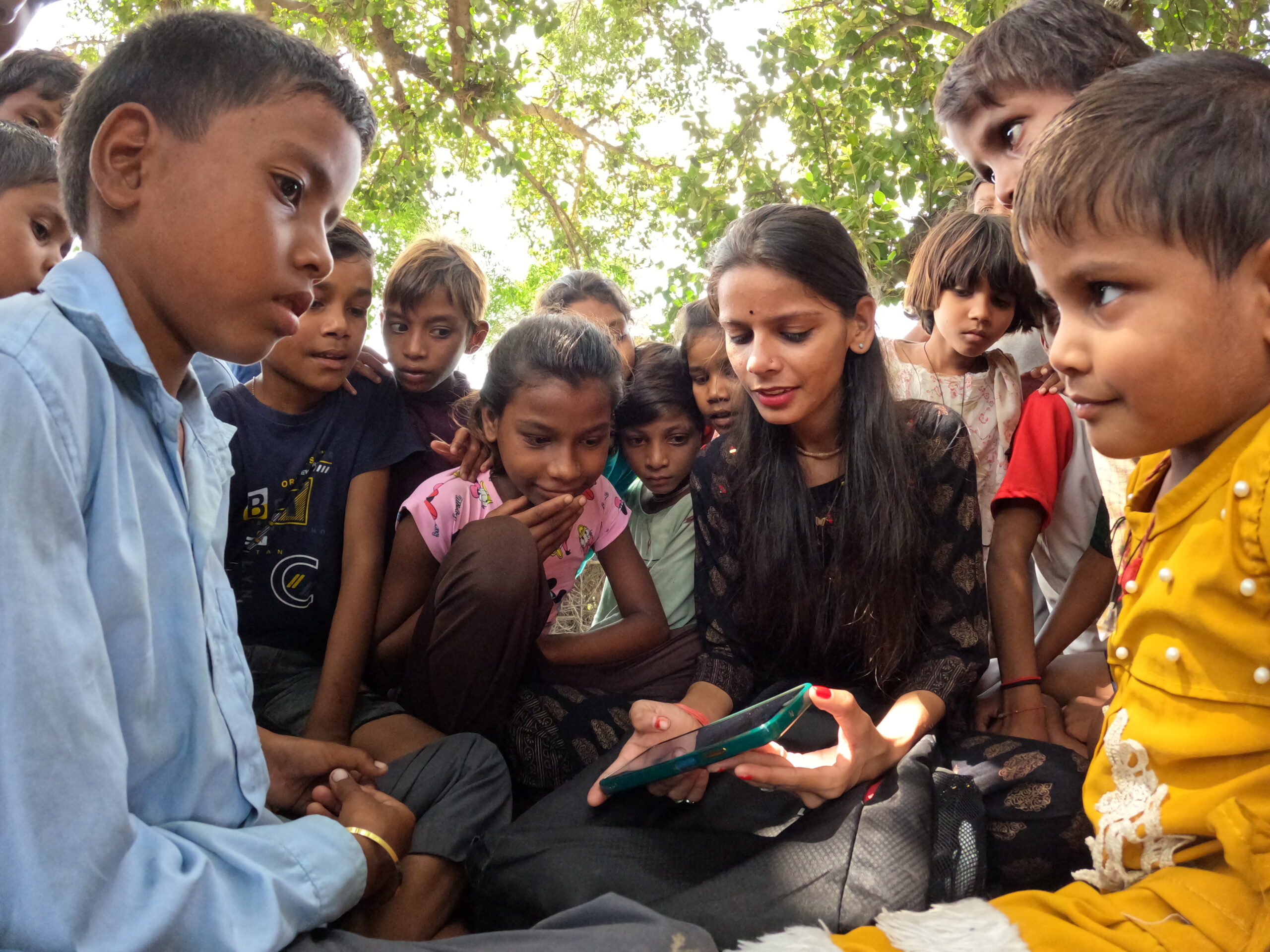

Buniyadi Shiksha Abhiyan Campaign (May-June 2023):
- 17,516 Demo schools selected across 112 districts
- 53,835 Middle managers and teachers trained
- 127018 Students reached through community classes by 5611 volunteers
Google Read Along:
- 55 Districts aligned
- 1183 Workshops conducted
- 25,52,140 Students are using the App for learning
Shiksha Ki Pahel (Maitri Project):
- 183 Middle managers trained across Chatra and Simdega districts of Jharkhand
- 38 Schools facilitated the Campaign for transition rate
- 30 Schools observed enrollment improvement
- 109 Schools activated the School process
Khushaal Bachpan Abhiyan Campaign (till Dec 2023):
- 39 ICDS & 30+ Health Department influenced
- 4461 Middle managers and Anganwadi workers were trained
- 49160 Children participated in the baseline
Social Emotional Learning:
- 1700 Anganwadi centers across 11 Districts implemented the SEL-focused ECE Curriculum
- 68 Middle Managers (AS/CDPO) underwent training
- 1049 Children underwent baseline and endline assessments
Responsive Parenting (DULAR):
- 10398 Anganwadi workers were trained, benefiting 62472 children aged 0-6 years
- 75 Districts of Uttar Pradesh observed the program being scaled up
Muqammal Taleem Behtar Mustaqbil Campaign (till 15th March 2024):
- 10 Districts aligned
- 124 Meetings held with Madrasa officials
- 100 Madrasas aligned for Demo Madrasa interventions
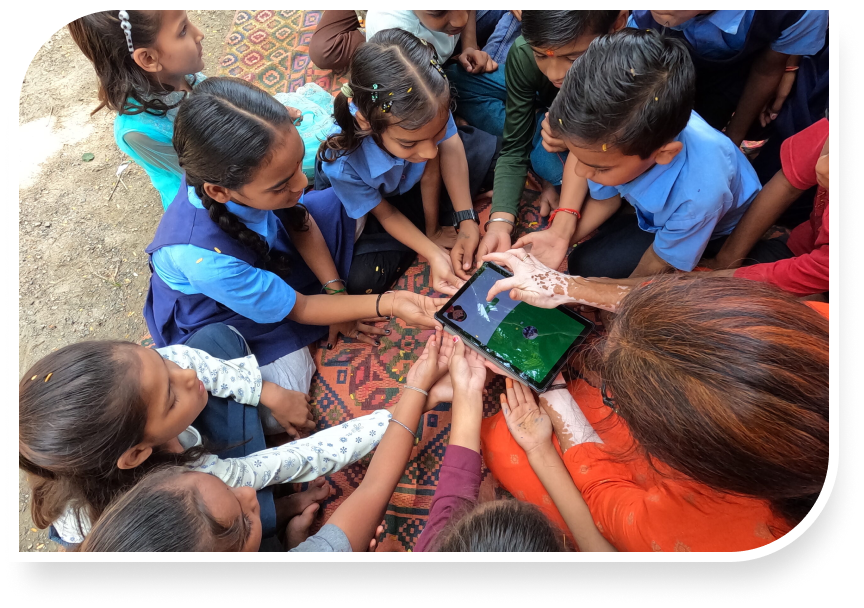
Program Gallery
Future Plans
Our future efforts will involve strategic engagement across the various phases delineated in the National Education Policy (NEP). This will entail the introduction of innovative products, the implementation of efficient processes, the cultivation of partnerships, and a concentrated focus on thematic areas pertinent to fulfilling the demands of School 2047
- Initiate trial programs in the Middle and Secondary educational stages while reinforcing ongoing initiatives in the Foundational and Preparatory phases
- Develop innovative educational resources tailored to meet the requirements of School 2047, including Learning Corners, Project-Based Learning (PBL), Hunarshaala, Kitchen Gardens, STEAM Labs, Tinkering Spaces, Convergence Enablement Modules, and Hyper-Local Collaboration Tools. Additionally, introduce FLN Podcasts and a CRC/Teacher Networking App
- Implement efficient procedures such as Action Research and evaluative studies to devise context-specific solutions and utilize technology-based Monitoring and Evaluation (M&E) tools to ensure the efficacy of our interventions
- Expand our programs to cover new thematic areas like Gender in Education, Value Education, Climate Resilience in Education, Career Counseling, Financial Literacy, and Entrepreneurship
- Engage new partners and collaborate with existing ones to co-create solutions, such as Launch Girls and Co-Impact for Girl Education, as well as Auroville for Climate Resilience in Early Childhood and Green School initiatives
Get in Touch
If you have any questions or inquiries, do not hesitate to get in touch; we look forward to engaging with you.